WHAT SHOULD YOU KNOW BEFORE GETTING INTO BEEKEEPING?


Before getting into beekeeping, there are several important things to consider:

Local regulations: Check your local regulations to ensure that beekeeping is allowed in your area. Some cities and towns have restrictions or prohibitions on beekeeping, so it is important to check before investing time and money into starting a hive.

Allergies: Beekeeping involves working closely with bees, so it is important to know whether you are allergic to bee stings before starting. If you have a severe allergy to bee stings, beekeeping may not be safe for you.

Time commitment: Beekeeping requires a significant time commitment. You will need to check on your hives regularly, typically every 7-10 days during the active season. You will also need to spend time preparing your hives for winter and maintaining your equipment.

Financial investment: Beekeeping can be expensive, particularly if you are starting from scratch. You will need to invest in hives, protective clothing, tools, and bees. It is important to budget for these expenses before getting started.

Learning curve: Beekeeping is a skill that takes time to learn. There are many resources available to help you get started, including beekeeping courses, books, and online forums. However, it may take time to develop the knowledge and skills necessary to successfully maintain a hive.

Hive location: Bees need a suitable location for their hive. The location should be sheltered from the wind, have access to water, and be free from pesticides and other chemicals.

Hive maintenance: Beekeeping involves maintaining the health of your hive. This includes checking for pests and diseases, feeding your bees when necessary, and managing the growth and productivity of your hive.

Overall, beekeeping can be a rewarding and fulfilling hobby, but it is important to do your research and understand the commitment involved before getting started.

HOW TO LIVE SUSTAINABLY ON A SMALL LOT


Living sustainably on a small plot can be a fulfilling and environmentally conscious way of life. Here are some tips on how to do it:

 1.       Gardening: Growing your own fruits and vegetables is a great way to reduce your carbon footprint and eat fresh, healthy food. Start small by planting a few easy-to-grow vegetables, such as tomatoes, lettuce, and cucumbers. You can also consider companion planting to maximize the use of your space and natural pest control. Use compost and other organic fertilizers instead of chemical ones, and practice water conservation by using drip irrigation and mulching.

2.       Backyard chickens and ducks: Raising backyard chickens and ducks can provide you with a sustainable source of eggs and meat. Make sure you have enough space for them to roam and provide them with a comfortable shelter. Use their manure as a natural fertilizer for your garden.

3.       Beekeeping: Keeping bees can be a great way to support pollination and produce your own honey. Research the laws in your area before getting started and invest in proper equipment and education to ensure the safety of yourself and your bees.

4.       Collecting rainwater: Collecting rainwater is a great way to conserve water and reduce your dependence on municipal sources. Install a rain barrel or other rainwater harvesting system to capture and store rainwater for use in your garden.

5.       Reduce waste: Consider composting food scraps and yard waste to create a nutrient-rich soil amendment for your garden. Use reusable bags, containers, and utensils to reduce waste in your daily life.

6.       Support local businesses: Support local farmers and businesses by purchasing food and other goods from them. This not only helps the local economy but also reduces the carbon footprint associated with transportation and shipping.

7.       Use natural pest control: Instead of using chemical pesticides and insecticides, use natural methods to control pests in your garden. Companion planting, using predator insects like ladybugs and lacewings, and using natural repellents like garlic and chili pepper spray are all effective ways to keep pests at bay.

8.       Conserve energy: Use energy-efficient appliances and light bulbs and consider installing solar panels or other renewable energy sources on your property. Unplug electronics when not in use and use a clothesline or drying rack instead of a dryer.

9.       Reduce water usage: In addition to collecting rainwater, there are many other ways to reduce your water usage. Install low-flow faucets and showerheads, fix leaks promptly, and plant drought-tolerant plants in your garden.

10.   Support wildlife: Create habitats for wildlife by planting native plants and providing food, water, and shelter. Build birdhouses and bat houses and consider creating a small pond or other water feature to attract amphibians and other aquatic wildlife.

11. Growing fruit trees is another great way to live sustainably on a small plot. Not only do fruit trees provide delicious, fresh fruit for you to enjoy, they also provide habitat for beneficial insects, such as bees, butterflies, and other pollinators. When choosing fruit trees, consider selecting varieties that are well-suited to your climate and soil conditions. Some popular fruit trees for small plots include apple, peach, plum, cherry, and pear trees. You can also consider growing dwarf varieties, which take up less space and are easier to maintain.

Living sustainably on a small plot requires dedication and effort, but the rewards are well worth it. By taking steps to reduce your carbon footprint, conserve resources, and support the environment, you can make a positive impact on the world around you.

A Jewel in the Fall

Persimmon is a popular fall fruit in China. It has long been enjoyed in China not only as a delicious fruit, but also for its multitude of health benefits. Persimmons are high in nutrients and can increase the body's metabolism. Ripe persimmons contain 15% sugar, 1.36% protein, 0.57% fat. It is rich in soluble fiber, vitamins A and C, and minerals including calcium, phosphorus, iron and other elements. However, because it's high tannin content, certain rules need be to observed when consuming persimmons.

In Chinese medicine terms, persimmon is:
a) Cool in nature, therefore it can remove excess heat in the body.
b) Sweet and Astringent in property, enters the stomach and spleen meridians. Which means it has the property to generate Yin fluids, dissolve and remove phlegm, stops bleeding.
c) It it suitable to ease the symptoms such as dry cough, sore throat, high blood pressure and cleans the arteries. Therefore, it can benefit chronic illnesses like chronic bronchitis, hypertension, arteriosclerosis, internal and external hemorrhoids.
Although it has many benefits,  there are cautions one needs to be observed when consuming persimmons. Persimmon is high in tannin, an acid that gives it the astringent property. So when eating persimmons, you should avoid certain food.

Through thousands of years of practice, the Chinese people observed a set of rules to allow them enjoy persimmons without potentially being harmed. They are:
1) Do not eat persimmons with an empty stomach. When you are hungry, the stomach has a higher acid content, eating persimmons in an empty stomach can irritate the stomach and may cause minerals to precipitate and cause stones to form in the body.
2) Do not consume a large amount of persimmons in one sitting. Because of its tannin content, consuming large quantities of persimmon can interfere with the body's mineral absorption ability.
3) Peel the persimmons before eating. There is a concentrated amount of tannin in the skin, therefore removing the skin will lessen the chance of consuming too much tannin.
4) Do not eat together with seafood, especially crab. Both persimmon and crab are cool in nature, eating them together will compounding the cooling effect to the body, and can bring on the imbalances of the body. The proteins in shrimp or other sea food could possibly react with the tannic acid, causing discomfort.
5) Do not eat it together with yam or sweat potato. When the starch from yam or potato ferment in the stomach, it could react with persimmon, resulting the fibers and other materials to form settlement that could influence the normal function of the stomach, in severe cases, could result in blocked intestine.

With that in mind, enjoy this unique fruit mother nature has to offer!


Best Simple Pound Cake

This is a pound cake made with the real things, it is super easy and soooooo delicious! I am putting this recipe up to share with all as well as to remind myself how to make it next time.

best simple pound cake

Ingredients:
2 sticks of butter (1/2 pound)
1-2/3 cups of sugar
5 eggs (from my hens)
1/2 teaspoon salt
1 table spoon half and half

Instructions:
Pre-heat oven at 300 degrees Fahrenheit
1. Cream together sugar and butter in the mixer or with a hand mixer
2. Add eggs, one at a time, keep mixing
3. Add salt and half and half and sift in flour, mix well
4. Pour batter in a round fluted pan
5. Bake in the oven for one hour

Variations: Add lemon zest and lemon juice instead of half and half.

Serving suggestion: Serve with fresh strawberry and vanilla ice cream.


Growing Tomatoes From Seeds

Old German Tomato

If the last day of frost supposed to be April 15, then it's time to start your tomatoes. Tomatoes should be started 6-8 weeks before the last estimated frost date. So if you haven't started them yet it's time to do it. It actually also depends on your set up, if you have a heat mat and lamps then starting them a little late is OK, if you do not then start them a little early. Tomatoes typically germinate between 3-10 days, depending how fresh the seeds are and the temperature you start them at.
Here are a few steps to follow if you want to grow your own tomato plants from seeds:
(1) Select the varieties you like to grow
(2) Get fresh potting soil, and if they are not pre-fertilized, add a small amount of fertilizer
(3) Fill 4" pots with potting soil, moisten slightly.
(4) Place one seed on each corner, cover with more potting soil.
(5) Water well, and keep in a warm, sheltered space.
Check periodically and water when necessary. You only need to keep the soil moist, not drenched. When the tomato seeds germinate and about 2" tall:
(6) Separate them and transplant them into their own 4" pots. Keep them there until ready to transplant.
(7) Transplant the tomatoes when the night time soil temperature is above 50 degrees F consistently. Add
Small seedlings
Tomato ready to transplant

What to do with expired vitamin pills?

If you ever have vitamins and other health supplements that are expired, don't through them away, feed them to your plants. You can do this for your indoor plants as well as the outdoor ones. Make sure you water the plants well after you fed them the vitamins. You will be surprised how much vibrancy they can bring out the plants. And best of all, what not? waste not!

Homemade Strawberry Lemon Zest Jam

Strawberry Lemon Zest Jam
Strawberry Lemon Zest Jam This is my all-time favorite jam. When make strawberry jam. It is delicious with a tangy surprise of the lemon zest. It makes a great gift for anyone.
Ingredients:
5 cups crushed strawberries (about 5 lbs)
Zest from 2 lemons
1/4 Cup lemon juice
1 pack of fruit pectin
7 cups granulated sugar
8 half pint (8 oz) glass preserving jars with lids and bands
Directions:
1. Heat jars in hot water
2. Combine strawberries, sugar, lemon zest and lemon juice in a large saucepan. Gradually stir in pectin. Bring the mixture to a full rolling boil that cannot be stirred down. Cook for an additional minute. Turn off the heat.
3. Pack hot jam into hot jars with 1/4 inch head-space. Wipe rim with a paper towel dipped in hot water. Place jar lid and screw band until finger tight.
4. Process in a boiling water bath for 10 minutes. Remove jars, tighten lids and allow to cool.

How Food Can Affect the Body's Balance.

In Chinese Medicine, lamb is considered a Yang food, which means it brings warmth to the body and increase the body's Yang aspect. For people with Yang deficiency, eating lamb can correct their imbalance, but for people with symptoms of Excessive Heat or Yin Deficiency should be cautious when consume lamb.

Symptoms of excessive heat are: Skin eruptions, redness in the eyes, canker sores in the mouth or the tongue, inflamed or bleeding gums, nose bleed, and sore throat. Excessive heat in the body may also cause scant and dark urine, constipation. When the body has excessive heat, the tongue may appear reddish in color, and with thick yellowish coating.

Symptoms of Yin Deficiency are: Feeling hot in the palms of hands and feet (one indication is you like to expose your feet when you sleep), impatience, hot flashes, red cheeks, insomnia, dry mouth and sore throat, dizziness, ringing in the ears and night sweats.
These symptoms suggest the body either has too much fire (Yang Excess) or not enough water (Yin Deficiency), eating lamb is only going to exacerbate the conditions. On the other hand for those who are Yang Deficient, eating lamb can greatly improve the condition.

Symptoms of Yang Deficiency are: Feeling cold in general, especially hands and feet,lack of appetite, pale face and lips, loose bowel or diarrhea, clear and copious urine, sweat easily, lack of energy, pale tongue, white tongue coating and teeth marks on either side of the tongue.
When someone is Yang deficient the body is in a state of needing more energy and warmness, and eating lamb can accomplish this goal. Other food good for increasing the body’s Yang includes cinnamon. So for those people with Yang deficiency, occasional cinnamon rolls can make you feel good. Exercises can also increase the Yang of the body. So for folks who are Yang deficient, after eating the lamb stew and cinnamon rolls, some light exercise is in order.

People with symptoms of Excessive Heat or Yin Deficiency should be cautious when consume lamb, while for those who are Yang Deficient, eating lamb can correct their imbalances. Another factor to consider when eating lamb is the seasons. Winter is cold, therefore more Yin in nature, so eating lamb in the winter can increase the body’s Yang to balance with nature’s Yin. Summer is hot and Yang in nature, so avoid eating too much lamb to avoid excessive fire being generated in the body.

Disco Fried Eggs AKA Toad in the Hole from India

If you have fresh home raised eggs, definitely try this recipe. It is easy and super delicious, and has the added bonus of health benefits :) http://gardenmyway.com/healthy/bt-food/141-disco-fried-egg

Dolma, Easy and Delicious

Dolma
Dolma is a popular Middle Eastern dish. If you have grape vines in your garden, make this easy and delicious dish using the tender grape leaves. All you have to do is to make a ground beef and rice mixture, similar to that of a cabbage roll. Only instead of warping them in cabbage leaves, you wrap them in grape leaves. The easy part is you just have to steam them for 15 minutes, and they are ready to serve. Super easy and delicious!


Feverfew (http://en.wikipedia.org/wiki/Feverfew) is a great medicinal herb, it possesses anti-inflammatory quality. Its name came from Latin, meaning "fever reducer". The plant can be used to treat minor ailments such as headache. Scientific studies have shown that feverfew has the ability to kill off some cancer cells. Feverfew tea is delicious, here'w how to make it:
Place feverfew flowers, mint leaves and lemon balm leaves in a tea pot, pour boiling water in the pot. Cover the teapot with a kitchen towel. Let stand for  minutes. Serve with honey.

Tips for Gardeners-What to do with expired vitamin pills

If you ever have vitamins and other health supplements that are expired, don't through them away, feed them to your plants. You can do this for your indoor plants as well as outdoor ones. Make sure you water the plants well after you fed them the vitamins. They can bring out the vibrancy in your plants.

Tips for Growing Lettuce

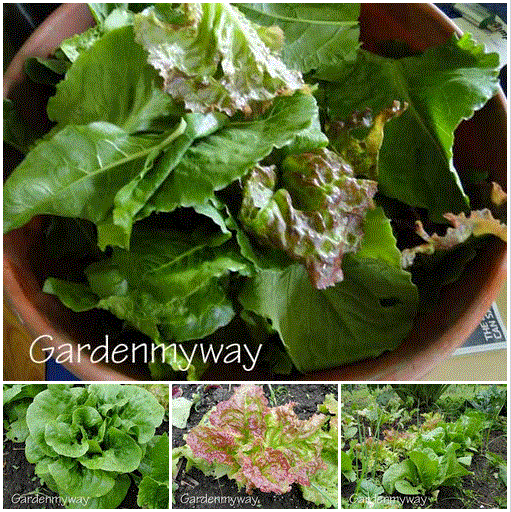
Lettuce is among the easiest vegetables to grow. Here's one way to make it even easier. When the outer leaves of the lettuce get big enough to eat, harvest them. Leave the plant alone, it will generate more leaves. This way you get more leaves from one plant then harvesting the whole plant, and you don't have to waste the outer leaves. Plant several varieties of lettuce it will add more color and texture to your salad. Good luck and happy gardening! http://gardenmyway.com/garden/


White peony in the garden is blooming. The outside of the flower petals is slightly pink, it has the best fragrance in the May garden. In spite of its graceful beautiful appearance, you don't need a green thumb to grow peony. Peomy has a large root system and once established it is very hard to be mishandled. The root system will get bigger with each growing years, you can divide it to make new plants.

Locust Flower Pancakes

Locust flower is not only edible, they also have many health benefits. In Chinese Medicine locust flowers are primarily used to reduce the excessive heat from the liver, which can cause headache, eye and throat irritation, hemorrhoid, blood in stool. The flower can be made into tea. Locust flowers also make great tasting pancakes...http://gardenmyway.com/garden/bt-food/120-locust-flower-pancake


Porridge, gruel, mush... your body needs it!

Gruel, attainable healthy
A new small kitchen appliance can change your healthy... Yea, yea, yea, you say to yourself, how many times have I heard of that? But, this thing really works! It is a soy milk maker, however it does more than soy milk. I use it to make porridge, gruel or mush, whatever you call it. It is an easy and delicious way to boost your health. You can use all sorts of grains, legumes and other nutritional rich ingredients. It has a heating element and a blender built in, it will break up all the ingredients and make them into a thin porridge like paste. The sensor inside the machine will stop the porridge from boiling over.
A simple recipe goes like this: 1 cup of black rice, 2 cups of white rice, 1 cup of assorted legumes (small red  beans, kidney beans, mung beans or navy beans or whatever you have on hand), 1/4 cup of black sesame seeds and 1/4 cup of flax seeds.
Use 2/3 cup of the gruel mix, add 6 cups of water, set the soy milk maker to "dry beans" and the cooking will begin. 20 minutes later you will have a pot of healthy warm delicious gruel.
The colorful various ingredients you add to your gruel mix consists of vital nutrients, nutrients our bodies don't get in the SAD diet (Standard American Diet), nutrients our bodies desperately need. The machine break up the cellular structures of the ingredients, making nutrients easily accessible to our bodies.


Gruel Mix

How to Grow Baby Bok Choys

Baby bok choys belong to the cabbage family. They are the non-heading cousins of the regular green cabbage. They are easy to grow. They mature quickly, 30-45 days The key to succeed in growing baby bok choys is to pick the right variety for the right season. The secret is most baby bok choys, or cabbage family for that matter, are cool crops that only do well in the fall. There are special classes of baby bok choys or cabbage that can be planted in spring and summer successfully. These are the breeds either through hybridizing or special selection that acquired the traits that allow them to withstand the spring conditions. So if you are planting them in the spring or summer look for the varieties that are bolt resistant or specifically bred for spring.

Building a Small Homestead

Green lawn or green living? It doesn't have to be one or the other, building a small homestead in your backyard will allow you to save money, eat fresh and nutritious food and reduce your carbon foot step. To fit all the pieces together can take sometime, but next time when you plan your landscaping, consider implementing some of these ideas. Planting fruit trees instead of the regular landscaping trees, they can be beautiful as well as functional. An herb and vegetable garden will allow you to enjoy fine dinning right at your dinner table. Raising chickens or ducks if circumstances allow, is a great way to form a mini eco-cycle, not only you can get the fresh eggs, the animals will eat any leftover food you may have and they are great at keeping the insect pressure low on in the garden. Following a few simple steps, you can too enjoy the green living and reap all the benefits from it.

How to Grow Cucumbers


Fresh cucumbers from the garden is not the same as the super market kind. To grow cucumbers successfully, you need to learn a few tricks. Cucumbers are very sensitive to the soil temperature so do not sow cucumbers until the ground is warmed up significantly. Soil temperature should be at least 55F before you sow cucumbers. Tips for starting the seeds indoors and then transplanting to the garden:  The ideal germinating temperature for cucumber is 75 to 80F. Time the starts so they are ready to be transplanted when they have two sets of leaves plus the tip growth. How long you can achieve this depends on the growing condition, but usually you can do this in 4 weeks. The seedlings will need to be "hardened off" before being transplanted to the garden. Hardening off is a process of exposing the seedlings to the environment where they are going to be growing so they won't experience the transplanting shock. Cucumbers are notorious difficult to transplant, the reason being their root system do not recover well. So if you could sow them directly in the garden.

Growing Potatos

June 20. Potato plants are lush and full, a few started to flower. This is the indication that new potatoes are forming underground. Carefully remove the dirt under the plants and you can "steal" a few. After stealing the potatoes, be sure to back fill at the root level with some compost, cover as much stem as you can. There will be new potatoes developing.
New Potatoes